Communiqué from the African Leaders’ Debt Relief Initiative on the Outcomes of the G20 Summit
South Africa put debt sustainability on the G20 Agenda: Now others must cut through the Gordian Knot
Abuja, 23 November 2025
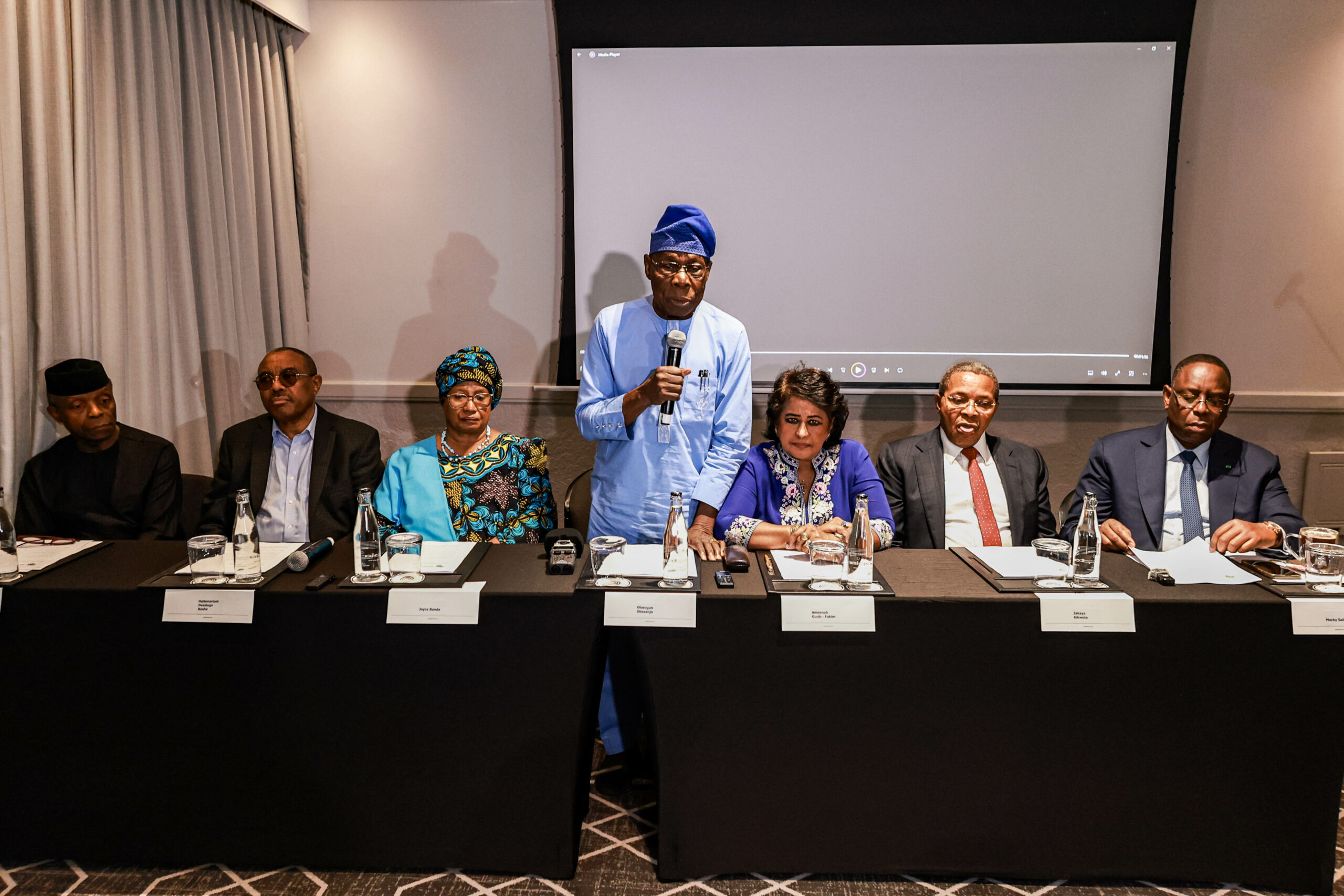
At the conclusion of the G20 Leaders’ Summit in Johannesburg, South Africa, we, eight former African Presidents, Vice-Presidents and Prime Ministers who formed the African Leaders Debt Relief Initiative, commend President Ramaphosa’s leadership in placing debt sustainability at the center of the G20 agenda. We urge that the momentum generated at this summit be sustained, and that the work towards resolving the debt challenge of African and other highly indebted countries be intensified, accelerated and strengthened.
The ministerial declaration on debt sustainability released by G20 finance ministers and central bank governors in October represents a welcome and necessary first step in recognizing the scale and complexity of the challenge. Yet, much remains to be done. The dialogue initiated in Johannesburg must not conclude here. Commitments must translate into concrete, measurable progress towards a sustainable and lasting solution to the global debt crisis.
According to UNCTAD, more than 3.4 billion people live in countries today that spend more on debt service than on health or education. Public external debt across Africa has more than tripled since 2008 and debt service payments are projected to reach $88.7 billion in 2025—more than the continent’s total annual climate finance. Nearly 60% of low-income African countries are already in or at high risk of debt distress, diverting essential resources from public services, adaptation, and economic transformation.
Following the Lomé Declaration and the subsequent adoption of the Common African Position (CAP) on Debt, African countries have demonstrated that greater coordination and unified action can shape global policy. Initiatives such as the Borrowers’ Platform, co-led by Zambia and Egypt with support from UNCTAD, can help strengthen South–South cooperation, build capacity, and promote collective negotiation. These efforts underscore Africa’s growing role as a proactive and solutions-oriented actor in the global financial architecture.
In this spirit, we call on the G20 and the broader international community to work collaboratively and with a sense of urgency towards the following outcomes:
- Comprehensive Debt Restructuring for highly indebted countries. This includes:
- A predictable, fair, and inclusive debt restructuring process involving all creditors—private, bilateral, and multilateral.
- Ensuring comparability of treatment across creditors to avoid fragmentation and prolonged crises.
- Lowering the Cost of Capital for all developing countries. This includes:
- Credit enhancements through multilateral institutions to unlock affordable financing.
- Debt suspension mechanisms to create fiscal space for development and climate investments.
The momentum generated in Johannesburg must be preserved and strengthened. Looking ahead, we urge President Donald Trump, as the incoming G20 host and President Emmanuel Macron, hosting the G7 Summit, to use their convening power to push through lasting reforms. Together, we can ensure that debt relief becomes not just a conversation but a catalyst for sustainable growth, equity, and shared prosperity.
H.E. Olusegun Obasanjo, Former President of Nigeria and Chair of ALDRI:
“The process that began under South Africa’s G20 Presidency must now move forward with courage and resolve. We call on all G20 leaders—and our partners in the EU and AU—to ensure that debt reform remains a top global priority in 2026 and beyond. Dialogue is important, but what we need now is delivery.”
H.E. Nana Addo Dankwa Akufo-Addo, Former President of Ghana:
“The benefits of debt relief for Africa—and for the world—are transformative. Today, too many African nations spend more on debt than on healthcare or education. Easing this burden will allow governments to invest in essential services, create jobs, and build resilient economies.
Debt relief is not an act of generosity—it is a strategic investment in global stability, peace, and sustainability. What helps Africa helps the world.”
H.E. Ameenah Gurib-Fakim, Former President of Mauritius:
“The devastating impacts of recent storms such as Melissa, which swept away key infrastructure in Jamaica and other Caribbean nations, are stark reminders that small island states face the compounded crisis of debt and climate vulnerability. We bear the consequences of climate shocks we did not cause, while struggling under debts we cannot service. True resilience will come not from temporary relief but from a fair and predictable global financial system that enables investments in adaptation, recovery, and sustainable growth.”
H.E. Hailemariam Desalegn Boshe, Former Prime Minister of Ethiopia:
“In a deeply interconnected world, the resilience of one region sustains the stability of all. When debt traps nations in crisis, it weakens the global system we all depend on. Building resilience in Africa and other vulnerable regions is not charity — it is enlightened self-interest.”
H.E. Yemi Osinbajo, Former Vice-President of Nigeria:
“Africa stands ready to lead in the global green transition — to decarbonize, to innovate, and to create millions of new jobs in clean industries. But we cannot build a low-carbon future on the high cost of debt.
For many nations, meaningful participation in decarbonization will only be possible if debt relief creates the fiscal space to invest in people, technology, and sustainability. Debt reform and climate ambition must move forward together.”
About the African Leaders Debt Relief Initiative (ALDRI)
The African Leaders Debt Relief Initiative was launched in February 2025 to mobilize global support for comprehensive and timely debt reform. ALDRI is guided by the Cape Town Declaration and advocates for a fair, transparent, and sustainable international financial system.
Members of ALDRI:
H.E. Olusegun Obasanjo, Former President, Federal Republic of Nigeria (Chair)
H.E. Jakaya Mrisho Kikwete, Former President, United Republic of Tanzania
H.E. Macky Sall, Former President, Republic of Senegal
H.E. Joyce Banda, Former President, Republic of Malawi
H.E. Dr. Ameenah Gurib-Fakim, Former President, Republic of Mauritius
H.E. Hailemariam Desalegn, Former Prime Minister, Republic of Ethiopia
H.E. Nana Addo Dankwa Akufo-Addo, Former President, Republic of Ghana
H.E. Yemi Osinbajo, Former Vice President, Federal Republic of Nigeria
More Information